

Peak Bio Boost Review 2026: Does This Prebiotic Fiber Blend Work?
Affiliate Disclosure: This post contains an affiliate link. If you purchase through it, we may earn a commission at no extra cost to you. This does not influence our rating. See our Affiliate Disclosure page.
Medical disclaimer: This article is for informational purposes only and is not medical advice. Individual results vary. Consult a healthcare professional before starting any supplement, especially if you have a diagnosed digestive condition, kidney disease, or take other medications. Statements have not been evaluated by the FDA. This product is not intended to diagnose, treat, cure, or prevent any disease.
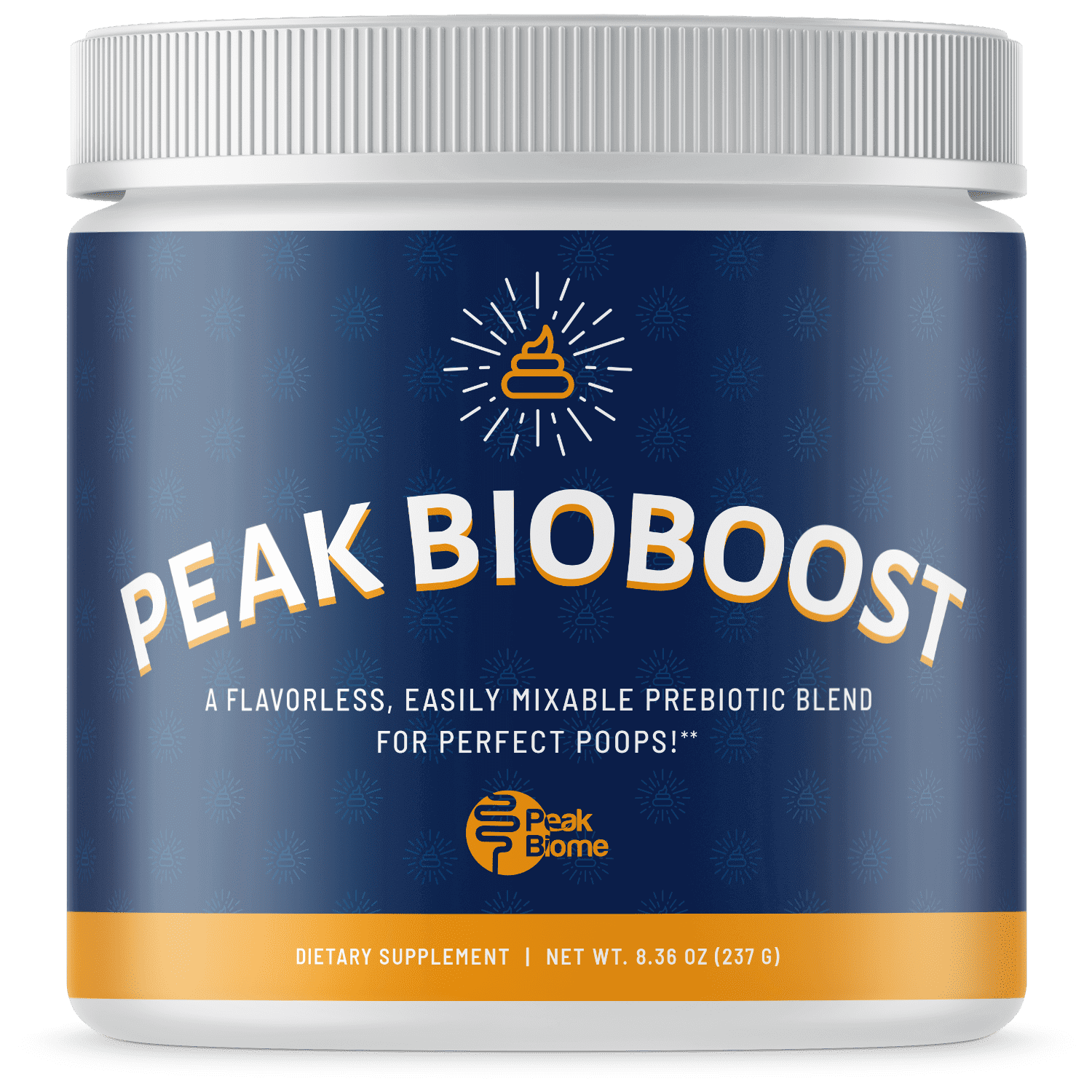
| Product | Peak Bio Boost (flavorless prebiotic fiber powder, made by Peak Biome) |
| Category | Prebiotic fiber blend marketed for daily regularity, reduced bloating, and gut bacteria support. Mixes into coffee, tea, or any liquid or food |
| Our Rating | 6.5/10. The core ingredients (XOS, inulin, FOS, acacia gum, magnesium citrate) are genuine, well-studied prebiotic and osmotic-laxative compounds, but the sales page leans hard on dramatic storytelling, testimonials, and inflated statistics rather than a clinical trial on the finished formula itself |
| Price | As listed at time of review: $44.95/bottle for 1 bottle (subscribe and save) or $59.95 one-time; $39.95/bottle for 3 bottles plus $9.95 shipping; $29.95/bottle for 6 bottles with free U.S. shipping. Confirm current pricing at checkout |
| Money-Back Guarantee | 3-month, 100% money-back guarantee, per the vendor’s sales page |
What Is Peak Bio Boost?
Peak Bio Boost is a flavorless powder supplement sold by Peak Biome that is designed to be stirred into coffee, tea, oatmeal, or a smoothie once a day. It is built around a blend of prebiotic fibers plus magnesium citrate, and it is marketed toward adults dealing with occasional constipation, bloating, or irregular bowel movements rather than a diagnosed digestive disease.
The sales page tells an extended personal story about the founder’s own struggles with irregularity and frames the product as a “poop speed” fix built around three claimed blockers: nerve stress, lack of fiber, and an imbalance of gut bacteria. Some of the language is dramatic (it compares the product to “Drano for your bowels” and cites a “171% more” stool-frequency statistic pulled from a single cited study), but the underlying ingredient category, prebiotic fiber for regularity, is a legitimate and reasonably well-researched approach to occasional constipation. Peak Bio Boost is not intended to diagnose, treat, or cure irritable bowel syndrome (IBS), inflammatory bowel disease (IBD), or any other diagnosed digestive condition, and anyone with those conditions should talk to a doctor before adding a new fiber supplement.
How Does It Work?
Peak Bio Boost combines several types of prebiotic fiber with magnesium citrate. Prebiotic fibers are indigestible carbohydrates that pass into the large intestine largely intact, where they are fermented by gut bacteria (particularly Bifidobacteria and Lactobacilli), and they can also add bulk and hold water in stool, which tends to make bowel movements softer and more regular. Magnesium citrate is a well-established over-the-counter osmotic laxative ingredient that draws water into the intestines to soften stool and stimulate a bowel movement. Between the fiber blend and the magnesium citrate, it is not surprising that many users notice a fairly quick effect, since magnesium citrate alone is a recognized short-term constipation remedy.
Ingredients Breakdown
The label does not disclose exact per-ingredient doses (it is presented as a proprietary fiber and mineral blend), so the amounts below reflect the vendor’s stated formula rather than a verified milligram breakdown:
- Xylooligosaccharides (XOS): a prebiotic fiber with published research on relieving occasional constipation and increasing beneficial Bifidobacteria. It is one of the more evidence-backed ingredients in this category.
- Inulin: a widely studied soluble prebiotic fiber (chicory root is a common source) that can soften stool and feed beneficial gut bacteria. It can cause gas and bloating in some people, especially at higher doses or when first starting it.
- Acacia Gum: a soluble, generally well-tolerated fiber with some research on supporting gut bacteria diversity and, in a few small studies, blood sugar and inflammation markers.
- Fructooligosaccharides (FOS): another well-studied prebiotic fiber that can promote regularity and feed beneficial bacteria, though like inulin it can cause gas or bloating in sensitive individuals.
- Magnesium Citrate: a real, recognized osmotic laxative mineral. This is likely the main reason many users notice results within a day or two. Because it is an active laxative-type ingredient rather than only a “gentle” fiber, people with kidney disease should not take it without a doctor’s guidance, and it can interact with certain antibiotics (such as tetracyclines and quinolones) and other medications by reducing their absorption if taken too close together.
Overall, the ingredient list is genuinely reasonable for a constipation-focused fiber powder, and it overlaps closely with other prebiotic fiber products already reviewed on this site. No clinical trial on the finished Peak Bio Boost formula itself was located; the evidence cited on the sales page is drawn from studies on the individual ingredients, not the product as sold.
Pros
- Combines multiple genuinely studied prebiotic fibers (XOS, inulin, FOS, acacia gum) with magnesium citrate, a recognized osmotic laxative mineral
- Flavorless and designed to dissolve in coffee, tea, or food, which may suit people who dislike swallowing capsules or drinking gritty fiber drinks
- 3-month money-back guarantee, per the vendor’s sales page
- Sold through ClickBank, meaning a standardized checkout and refund process
- No major disclosed stimulants or artificial sweeteners, per the vendor
Cons
- No per-ingredient Supplement Facts panel disclosed publicly on the sales page, so exact doses cannot be verified
- No clinical trial on the finished Peak Bio Boost formula, only on the individual ingredients it contains
- Sales page leans on dramatic storytelling, an extreme “Drano for your bowels” analogy, and heavily testimonial-driven marketing rather than sober, data-first framing
- Contains magnesium citrate, an active laxative ingredient, so it is not a “gentle fiber only” product despite how it is marketed, and it is not appropriate for people with kidney disease without medical guidance
- Inulin, FOS, and acacia gum can cause gas or bloating for some people, especially when starting out
Pricing & Where to Buy
Peak Bio Boost is sold only through its official Peak Biome sales page, with ClickBank as the payment processor. As listed at the time of this review:
| Package | Price | Per Bottle |
|---|---|---|
| 1 bottle (Starter Pack, subscribe and save) | $44.95 | $44.95 |
| 3 bottles (Family Pack) | $119.85 + $9.95 shipping | $39.95 |
| 6 bottles (Best Deal) | $179.70, free U.S. shipping | $29.95 |
Prices, discounts, and shipping offers on ClickBank sales pages can change without notice, so confirm the current price at checkout before buying.
Is Peak Bio Boost Legit or a Scam?
Peak Bio Boost is a real, ClickBank-sold product, not an outright scam. It ships from an identifiable company (Peak Biome), is processed through ClickBank’s standardized checkout and refund system, and its core ingredients are legitimate, commonly used prebiotic fibers plus a well-known laxative mineral.
That said, the sales page’s marketing is significantly more dramatic than the underlying science needs to be. It leans on an extended personal narrative, a graphic “Drano for your bowels” comparison, a large number of individual customer testimonials, and statistics (such as a “171% more” stool frequency claim and boosting specific bacteria “by up to 344%”) that are drawn from isolated studies on individual ingredients rather than from a trial on the finished Peak Bio Boost formula. Readers should treat those specific percentages as illustrations of what the ingredient category can do in some studies, not as a guaranteed result from this exact product. As with any fiber or laxative-adjacent supplement, starting with a smaller amount and increasing gradually is the more sensible way to gauge personal tolerance than following the page’s enthusiasm at face value.
Frequently Asked Questions
How do you take Peak Bio Boost?
The vendor recommends stirring one scoop into coffee, tea, water, oatmeal, or a smoothie once daily. Since it is flavorless, it does not noticeably change the taste of most drinks or food.
Are there side effects?
Fiber supplements like this one can cause gas, bloating, or loose stools, especially when first starting or if you increase the dose too quickly. Because it contains magnesium citrate, taking more than directed could cause diarrhea or cramping. People with kidney disease should not take magnesium supplements without a doctor’s guidance, and anyone on regular medication, particularly antibiotics, should ask a pharmacist or doctor about timing.
Can I take it with medication?
Magnesium citrate can reduce the absorption of certain antibiotics (such as tetracyclines and fluoroquinolones) and some other medications if taken at the same time. If you take prescription medication regularly, talk to your doctor or pharmacist before adding this or any new supplement.
What is the guarantee?
The vendor advertises a 3-month, 100% money-back guarantee on its sales page. As with any ClickBank purchase, refund requests are handled through ClickBank’s standard process.
Final Verdict
Peak Bio Boost is a reasonably formulated prebiotic fiber and magnesium citrate powder for people dealing with occasional constipation, bloating, or irregularity, not a diagnosed digestive disease. The ingredient list is genuinely more credible than the sales page’s dramatic storytelling would suggest, but buyers should discount the more extreme percentage claims and testimonials, start with a lower amount to check tolerance, and check with a doctor first if they have kidney disease or take regular medication. For adults without those concerns who want a flavorless daily fiber option, it is a fair, if unremarkable, entry in a crowded category.