
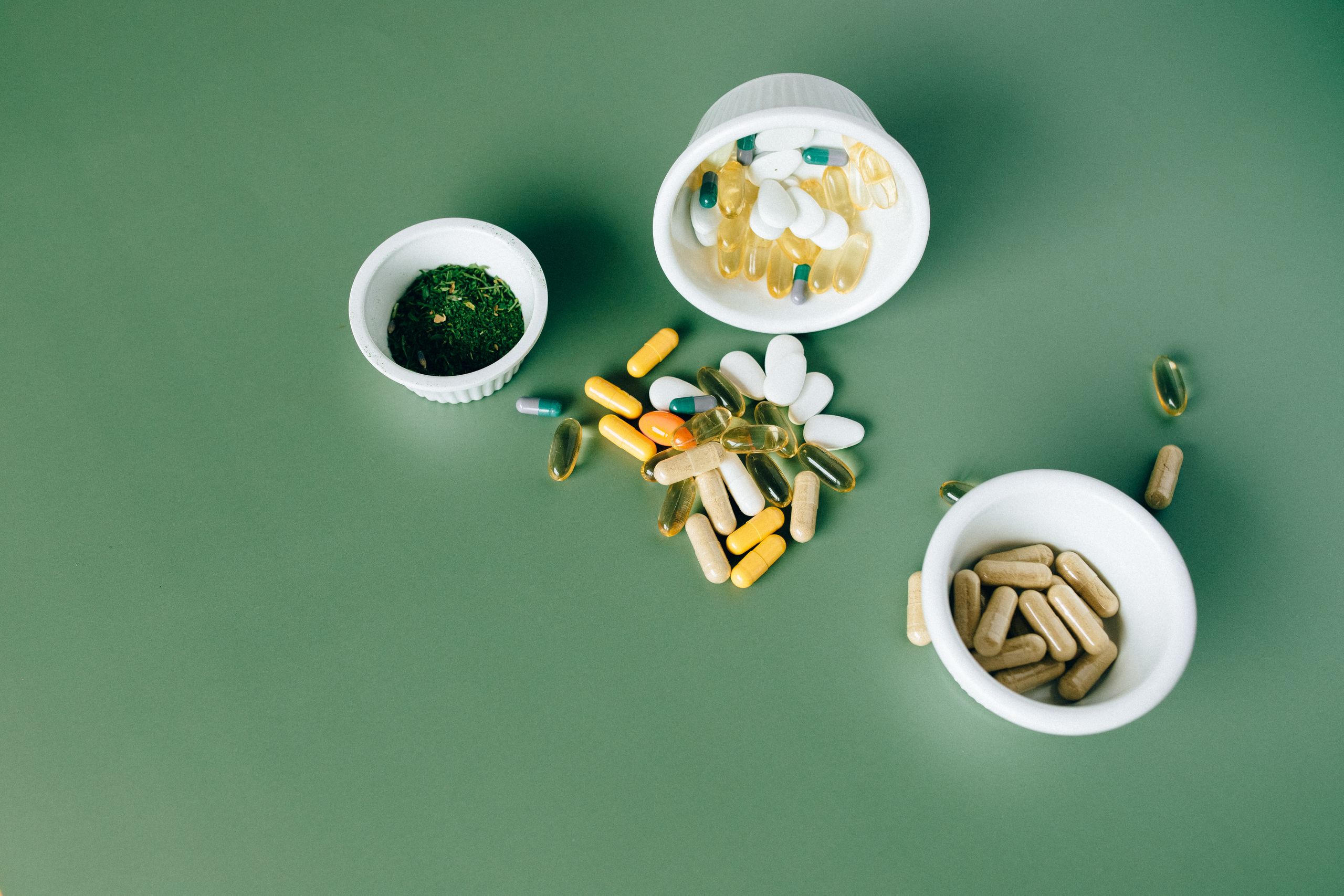
Postbiotics vs. Probiotics: What’s the Difference?
Medical disclaimer: This article is for informational purposes only and is not medical advice. Individual results vary. Consult a healthcare professional before starting any supplement, especially if you take other medications or have a digestive or immune condition. These statements have not been evaluated by the FDA. This content is not intended to diagnose, treat, cure, or prevent any disease.
Quick Answer
Probiotics are live microorganisms you consume for a health benefit. Postbiotics are preparations of inanimate (inactivated) microorganisms and/or their components that still confer a health benefit, even though the organism is no longer alive. Both are different from prebiotics, which are simply fibers that feed the bacteria already living in your gut.
The Three Terms, Defined Simply
- Prebiotics: Fibers and other compounds (like inulin or resistant starch) that your body can’t digest but the bacteria in your gut can. Think of them as fertilizer for the microbes you already have.
- Probiotics: Live bacteria or yeast strains (like Lactobacillus or Bifidobacterium species) that you consume in sufficient quantity to reach the gut and, ideally, provide a health benefit. Viability, meaning the organisms have to still be alive when consumed, is a defining requirement.
- Postbiotics: According to the 2021 consensus definition from the International Scientific Association for Probiotics and Prebiotics (ISAPP), a postbiotic is “a preparation of inanimate microorganisms and/or their components that confers a health benefit on the host.” The microorganisms are deliberately inactivated (through heat, pressure, or other processing), but their cell structure and health effects can be preserved and, in some cases, are even more consistent than the live version.
Why Would an Inactivated Bacterium Still Help?
It sounds counterintuitive, but a growing body of research suggests some of the health effects credited to certain gut bacteria come from their cell-wall components or the compounds they produce, not exclusively from them being alive and actively multiplying. Akkermansia muciniphila is the clearest current example: in a 2019 human pilot study, the pasteurized (heat-killed) version actually outperformed the live version on some metabolic markers. This is one reason postbiotics are sometimes called “next-generation” ingredients in the gut-health space.
Practical Differences That Matter
- Storage and shelf life: Because postbiotic ingredients don’t need to stay alive, they are generally more stable at room temperature and less sensitive to heat, moisture, and stomach acid than live probiotics.
- Who might want to be cautious: Live probiotics carry a small theoretical infection risk for people who are severely immunocompromised or critically ill, since you are introducing living organisms. Postbiotics, being inactivated, are generally considered to carry a lower theoretical risk in that specific scenario, though anyone with a serious immune condition should still talk to a doctor before adding any gut-microbiome ingredient.
- Evidence base: Probiotics have a much larger and longer-running body of human research overall. Postbiotics are a newer category, and the evidence for most individual postbiotic ingredients (including Akkermansia) is still described as preliminary.
Frequently Asked Questions
Q: Is a postbiotic just a “dead” probiotic?
A: Not exactly. The ISAPP definition specifically requires that the inactivated preparation still confers a demonstrated health benefit and that the original microorganism is fully characterized. Simply killing a probiotic strain without confirming a benefit wouldn’t qualify.
Q: Do I need to choose between probiotics and postbiotics?
A: No. They aren’t direct substitutes for each other and target different mechanisms; some people use products from both categories, and a doctor or dietitian can help you think through what fits your situation.
Q: Do any RovunoReviews-reviewed gut-health products contain postbiotics?
A: The gut-health products we’ve reviewed on this site (SynoGut, PrimeBiome, Gut Vita, Finessa, and BellyFlush) are formulated around probiotic and digestive-support ingredients, not postbiotic ingredients like pasteurized Akkermansia muciniphila. We link to this explainer from those reviews purely as background reading on a related, trending topic, not because any of those specific products contain a postbiotic ingredient.
Related Reading
- What Is Akkermansia Muciniphila? Postbiotics Explained
- Probiotics: Benefits, Dosage, Best Forms & Safety
- Gut Health Supplements: The Complete Guide
- Ingredient Guides Hub
Sources
- Nature Reviews Gastroenterology & Hepatology – ISAPP consensus statement on the definition and scope of postbiotics
- Nature Medicine (2019) – Supplementation with Akkermansia muciniphila in overweight and obese human volunteers
- ISAPP – Pasteurized Akkermansia muciniphila as a postbiotic: EFSA approval and beyond
These statements have not been evaluated by the Food and Drug Administration. This content is not intended to diagnose, treat, cure, or prevent any disease and is not a substitute for advice from your doctor or pharmacist.