Zeneara Review: Scam or Legit? Ingredients, Price & Side Effects (2026)
Taking a blood thinner or aspirin? Read our guide on ginkgo biloba and blood-thinner interactions before starting Zeneara.
Affiliate Disclosure: This post contains an affiliate link. If you purchase through it, we may earn a commission at no extra cost to you. This does not influence our rating. See our Affiliate Disclosure page.
Medical disclaimer: This article is for informational purposes only and is not medical advice. Individual results vary. Consult a healthcare professional before starting any supplement, especially if you take other medications, or if you have a diagnosed ear or hearing condition.
Hearing & tinnitus-specific note: Ringing in the ears (tinnitus), muffled hearing, or sudden changes in hearing can be symptoms of an underlying medical condition, including earwax buildup, noise exposure, medication side effects, an ear infection, Ménière’s disease, or, in rare cases, a vascular or neurological issue. Zeneara is a dietary supplement, not a hearing aid, and it has not been evaluated by the FDA. It is not intended to diagnose, treat, cure, or prevent any disease, restore hearing, or cure tinnitus. If you have persistent ringing, sudden hearing loss, ear pain, or drainage, see an audiologist or ENT (ear, nose, and throat doctor) for a proper diagnosis before trying any supplement.
Quick Verdict
| Product | Zeneara (capsule supplement) |
| Category | Capsule supplement marketed to support the nerve environment of the ear and overall ear health |
| Our Rating | 5.0/10. A calming-and-circulation blend built from generally safe, well-known botanicals, but the vendor discloses no per-ingredient Supplement Facts panel, and none of the seven ingredients has direct clinical evidence for tinnitus or hearing outcomes specifically. |
| Price | $59 for a 1-month supply, dropping to $49/bottle (3 bottles) or $39/bottle (6 bottles), per the vendor’s sales page. Confirm the current terms at checkout before buying. |
| Best For | Adults looking for a low-stimulant, plant-based daily capsule aimed at general ear and stress-related wellness, who understand this is not a treatment for tinnitus or hearing loss and are comfortable with an undisclosed-dose blend. |
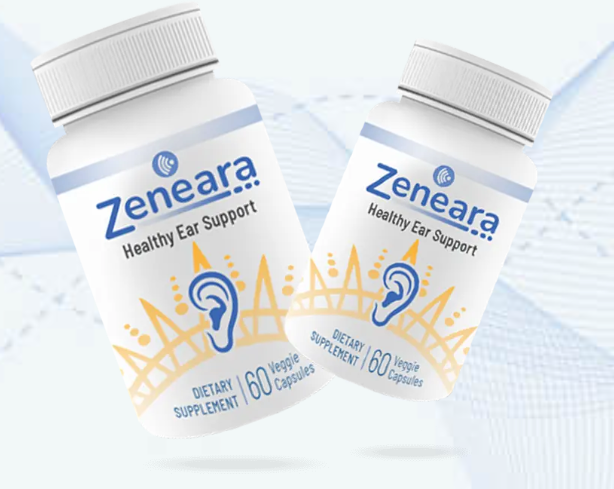
Zeneara is a capsule-based supplement sold through its official site and positioned around the idea that the ear’s nerve environment benefits from targeted plant compounds, antioxidants, and calming botanicals. See also our full Top Hearing & Tinnitus Supplements 2026, Ranked & Compared and our Quietum Plus review and Audifort review for how it compares against the other ear-health products we’ve reviewed.
What Is It?
Zeneara is a dietary capsule sold exclusively through its official website, positioned as daily support for “the nerve environment of the ear.” The sales page leans heavily on the idea that stress, poor circulation, and nutrient gaps can affect ear health, and builds its formula around botanicals traditionally used for relaxation, circulation, and general antioxidant support rather than any single headline ingredient. It is marketed as a natural, non-stimulant, non-habit-forming capsule.
How Does It Work?
Zeneara’s pitch is built on the idea that ear health depends on a calm nervous system, healthy blood flow, and adequate micronutrients, rather than on any single mechanism. The formula pairs calming botanicals (passion flower, valerian) with circulation- and antioxidant-focused ingredients (ginkgo biloba, taurine), a couple of general wellness micronutrients (vitamin B6, zinc), and a probiotic blend for broader gut and immune support. None of this is presented as acting directly on the inner ear, cochlea, or auditory nerve, and the vendor does not claim to reverse hearing loss or eliminate tinnitus.
Ingredients Breakdown
The sales page lists seven core ingredients per capsule but does not publish individual milligram doses in a Supplement Facts panel, so it is not possible to independently confirm whether any ingredient is dosed at a clinically studied level. Here is what the vendor claims and what the evidence actually supports:
| Ingredient | Vendor’s Stated Role | What the Evidence Says |
|---|---|---|
| Passion Flower Powder | Traditionally used to promote relaxation and alleviate stress and anxiety, which could help manage ear health | Some small human trials support passion flower for mild anxiety and sleep quality. There is no direct evidence it improves tinnitus or hearing, though stress reduction can make tinnitus feel less bothersome for some people. |
| Vitamin B6 | May help support overall health and metabolism | B6 is an essential nutrient involved in nerve function, and some observational research links very low B6 status to worse tinnitus symptoms. Supplementing beyond a normal, sufficient level has not been shown to treat tinnitus or hearing loss in people who are not deficient. |
| Zinc | Essential for immune function and wound healing | Zinc deficiency has been loosely associated with tinnitus in some older, small studies, but results are mixed and inconsistent. Zinc is a legitimate essential mineral; the ear-specific benefit claim is weak. |
| Ginkgo biloba extract | Believed to improve circulation and possess antioxidant properties, potentially helping maintain ear health | Ginkgo is one of the most-studied “ear health” botanicals, but large reviews and meta-analyses have found it no more effective than placebo for tinnitus specifically, despite decades of popularity for this use. |
| Probiotic blend | Supports digestive health and immune function, potentially helping overall well-being | Reasonable evidence supports probiotics for general gut and immune health. There is no established mechanism connecting a generic probiotic blend to ear or hearing outcomes. |
| Taurine | An amino acid with antioxidant properties that supports nerve function and cardiovascular health, potentially helping in overall well-being, including ear health | Taurine has documented roles in cardiovascular and nerve function. Ear-specific human evidence is limited to preliminary and animal research, not confirmed clinical benefit for tinnitus or hearing. |
| Valerian Extract | Known for its calming effects | Valerian has modest evidence as a sleep aid and mild calming agent. It has no direct evidence for hearing or tinnitus, though better sleep may indirectly ease how bothersome tinnitus feels for some users. |
Taken together, Zeneara is best understood as a calming-and-general-wellness formula built from familiar, generally well-tolerated botanicals, not a formula with ingredients specifically validated for restoring hearing or curing tinnitus.
Pros and Cons
Pros
- Uses recognizable, generally well-tolerated botanicals and nutrients with no stimulants
- Non-GMO, plant-based, and marketed as non-habit-forming
- Backed by an unusually long 365-day money-back guarantee, which is a meaningfully lower-risk return window than most competitors in this category
- Makes structure/function claims rather than disease-cure claims on its main sales copy
Cons
- No disclosed Supplement Facts panel: individual ingredient doses aren’t published in the text we could review, so it isn’t possible to independently confirm any ingredient is present at a clinically meaningful amount
- None of the seven ingredients has direct clinical trial evidence for tinnitus or hearing specifically; most of the supporting science is for stress, sleep, or general circulation
- Ginkgo biloba, the ingredient most associated with “ear health” marketing, has repeatedly failed to beat placebo for tinnitus in larger trials
- Sold only through the official site, so there is no independent retailer pricing or review history to cross-check
Pricing & Where to Buy
Zeneara is sold only through its official site, with ClickBank as the payment processor and retailer of record. Per the sales page at the time of this review: a single bottle (1-month supply) is $59, three bottles (3-month supply) work out to $49 per bottle with free shipping, and six bottles (6-month supply) work out to $39 per bottle with free shipping. The vendor also advertises a stress-management bonus e-book with multi-bottle orders. Promotional pricing and bonuses on these pages change often, so confirm the current terms and total at checkout before buying, and note that ClickBank’s standard purchase protection applies to the transaction regardless of which package you choose.
The vendor advertises a 365-day, 100% money-back guarantee, which is longer than the 60-day window typical of most ClickBank supplements in this category. A guarantee this long is a genuine point in the vendor’s favor if honored as described, though as with any ClickBank purchase, refund requests go through the vendor’s own support process, and you should keep your order confirmation and follow their stated refund steps.
Is It Legit or a Scam?
Zeneara is sold through ClickBank, an established affiliate marketplace with buyer purchase protection, and the sales page carries a standard FDA disclaimer stating the product is not intended to diagnose, treat, cure, or prevent disease. That is a legitimate transaction structure, not a hallmark of a scam. That said, “legit as a transaction” is different from “proven to work as marketed.” The core issues here are the missing per-ingredient dose disclosure and the lack of any tinnitus- or hearing-specific clinical trial on the finished formula itself, both of which are common across this entire product category and are not unique to Zeneara.
Be skeptical of any version of this offer, or any hearing supplement ad, that promises to “cure” tinnitus, “restore” hearing, or “regrow” damaged auditory nerves. No dietary supplement can legitimately make those claims, and language like that is a red flag regardless of which specific product is being sold.
FAQ
Will Zeneara cure my tinnitus or restore my hearing?
No. No dietary supplement, including Zeneara, can cure tinnitus or restore hearing loss. If you have persistent ringing or a change in hearing, see an audiologist or ENT for a proper diagnosis, since tinnitus and hearing changes can have many different underlying causes.
What’s actually in Zeneara?
Passion flower powder, vitamin B6, zinc, ginkgo biloba extract, a probiotic blend, taurine, and valerian extract, per the vendor’s ingredient list. Individual milligram doses are not published in a Supplement Facts panel on the pages we reviewed.
Is Zeneara safe?
The individual ingredients are generally recognized as well-tolerated at typical supplement doses, but because exact doses aren’t disclosed, and because Zeneara can interact with sedatives, blood pressure medication, or other supplements, talk to your doctor before starting it, especially if you take other medications.
How long until I notice anything?
The vendor doesn’t publish a specific timeline in the material we reviewed. As with most supplements in this category, expect any noticeable effect, if there is one, to take several weeks of consistent use, not overnight.
Is there a refund if it doesn’t work for me?
The vendor advertises a 365-day, 100% money-back guarantee, run through ClickBank. Confirm the current refund terms and process on the official order page before you buy.
Final Verdict
Zeneara is a reasonably formulated, low-risk calming-and-wellness capsule built from recognizable botanicals, wrapped in ear-health marketing that outruns what any of its ingredients can actually prove for tinnitus or hearing. If you’re looking for a gentle, non-stimulant daily supplement and you go in understanding it’s general wellness support, not a treatment, the unusually long 365-day guarantee makes it a relatively low-risk way to try it. If you’re dealing with persistent ringing, sudden hearing changes, or ear pain, see an audiologist or ENT first; no capsule, including this one, is a substitute for a proper diagnosis.
Affiliate Disclosure: This post contains an affiliate link, and we may earn a commission if you purchase through it, at no extra cost to you.
Before you buy: this product’s official sales page may present its ear-health claims more confidently than the independent research on its ingredients currently supports. Read the breakdown above, weigh it against the vendor’s own marketing, and if you have any hearing or ear symptoms, see an audiologist or ENT before trying any supplement.
See also our direct Audifort vs Zeneara comparison.