
The Smoothie Diet Review: Scam or Legit? 21-Day Program, Price & What’s Inside (2026)
Affiliate Disclosure: This post contains an affiliate link. If you purchase through it, we may earn a commission at no extra cost to you. This does not influence our rating. See our Affiliate Disclosure page.
Medical disclaimer: This article is for informational purposes only and is not medical advice. Individual results vary. Consult a healthcare professional before starting any new diet program, especially if you are pregnant or nursing, have diabetes, or have a heart, kidney, liver, or eating-disorder history. Statements have not been evaluated by the FDA. This product is not intended to diagnose, treat, cure, or prevent any disease.
Weight-loss note: The Smoothie Diet is a meal-replacement eating plan, not a drug, supplement, or treatment for obesity or any diagnosed metabolic condition. Testimonials on the vendor’s sales page (including specific pound-and-day figures) are individual results the vendor itself says are not typical; we do not repeat them as expected outcomes.
Quick Verdict
| Product | The Smoothie Diet (digital 21-day meal-replacement program) |
| Category | Downloadable diet plan and recipe system marketed for rapid, short-term weight loss |
| Our Rating | 7.2/10. A food-based, calorie-aware meal-replacement plan with a real health-coach author, but the sales page leans on individual testimonials the vendor itself flags as atypical, and the plan is not personalized for medical conditions like diabetes |
| Price | As listed at time of review: $27 (discounted from a stated $47) for instant digital access. Confirm current pricing at checkout, as ClickBank sales pages frequently run rotating “limited time” discounts |
| Money-Back Guarantee | 60 days, per the vendor’s sales page. Confirm the current terms at checkout before buying |
| Best For | Adults without diabetes or other metabolic conditions who want a structured, low-prep, short-term reset built around whole-food smoothies rather than a pill or powder |
What Is It?
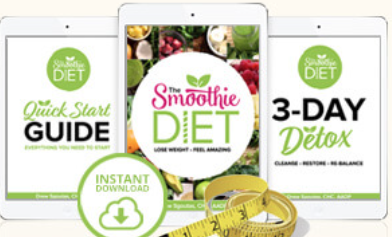
The Smoothie Diet is a digital 21-day meal-replacement program created by Drew Sgoutas, who identifies himself on the sales page as a Certified Health Coach (not a doctor or registered dietitian, a distinction the vendor’s own legal disclaimer confirms). Instead of a pill, powder, or drop, the product is a set of PDF guides: a 3-week eating schedule that replaces one or two daily meals with fruit-and-vegetable smoothies, more than three dozen smoothie recipes, weekly shopping lists, and a shorter “quick start” version of the same plan.
It is sold exclusively through the vendor’s own site and processed through ClickBank, so buyers get a standardized digital checkout and the ClickBank refund process rather than dealing with an unknown independent seller.
How Does It Work?
The core mechanism is straightforward and does not require taking the vendor’s more dramatic marketing at face value: replacing one or two meals a day with a lower-calorie, high-fiber, high-water-content smoothie will, for most adults, create a calorie deficit, and a calorie deficit is what drives weight loss. That part of the pitch is consistent with mainstream nutrition science on meal-replacement diets generally, not a discovery unique to this program.
Where the sales page oversells is in the “3-Week Weight Loss Schedule” framing, which implies the specific week-to-week sequencing of ingredients has a metabolic effect beyond ordinary calorie and nutrient variation. There is no independent clinical trial on this exact program, and rotating fruit-and-vegetable combinations to “keep the weight coming off” is a plausible-sounding claim rather than a demonstrated one. The realistic version of the mechanism is simpler: fewer calories, more fiber and micronutrients, less ultra-processed food, for three weeks.
One practical caveat worth flagging that the sales page does not emphasize: whole-fruit smoothies are not the same as fruit juice nutritionally (they retain fiber, which juice does not), but they can still be calorie-dense and carbohydrate-heavy per serving depending on the recipe, and the publicly visible material does not show a full nutrition or macro breakdown (calories, protein, and carbohydrate grams per smoothie) for every recipe. Anyone managing blood sugar should treat that as a real gap, not a minor one.
What’s Inside the Program
| Component | What It’s For | Our Take |
|---|---|---|
| Core 21-Day Guide | The main week-by-week meal-replacement schedule with a defined smoothie sequence | The central product; a structured, low-decision-fatigue plan is a genuine convenience for people who struggle with meal planning |
| 36+ Smoothie Recipes | Fruit-and-vegetable smoothie recipes built around whole ingredients | Reasonable, food-based recipes rather than a proprietary powder; no full nutrition label per recipe is published for us to verify protein/calorie counts |
| Weekly Shopping Lists | Pre-built grocery lists matched to each week’s recipes | A genuinely useful, low-risk convenience feature with no health claim attached |
| Bonus: 3-Day Smoothie Detox | A shorter, more restrictive 3-day version marketed for a “quick reset” | “Detox” is a marketing framing, not a defined physiological process; the body’s liver and kidneys already handle this in people without a diagnosed condition |
| Bonus: Quick-Start Guide | A condensed, printable version of the core guide | A convenience format, not a separate health claim |
Pros and Cons
Pros
- Built around whole fruits and vegetables rather than a proprietary powder, pill, or unnamed “proprietary blend”
- Created by a named, identifiable author (a Certified Health Coach) rather than an anonymous vendor persona
- Includes practical, low-risk tools (shopping lists, prep guide) that add real convenience regardless of how the weight-loss claims hold up
- Sold through ClickBank, meaning a standardized checkout and refund process
- The underlying mechanism (calorie deficit via meal replacement) is consistent with mainstream nutrition guidance, unlike some “detox” or “fat-melting” pitches in this category
Cons
- Testimonials the vendor itself flags as atypical: the sales page’s own FTC disclaimer states the featured results (including “8 lbs in 1 week” and “12 lbs in 21 days”) are not average or typical, yet those exact figures appear prominently above the fold
- No published nutrition breakdown: we could not verify calories, protein, or carbohydrate content per smoothie from the public sales page, which matters for anyone tracking macros or managing blood sugar
- Not personalized for diabetes or other metabolic conditions: the vendor’s own FAQ addresses a “type-2 diabetes” question with general reassurance rather than a documented protocol; we think that specific question deserves a doctor’s input, not a sales-page answer
- “Detox” bonus language oversells what a 3-day smoothie plan can plausibly do
- A short-duration, meal-replacement-heavy plan like this is easier to regain weight after than a sustainable long-term habit change, a point the vendor’s own FAQ (“won’t I just gain it back”) implicitly acknowledges
Pricing & Where to Buy
The Smoothie Diet is sold only through its official site, with ClickBank as the payment processor. As listed at the time of this review:
| Item | Listed Price |
|---|---|
| Full program (core guide + 3-Day Detox + Quick-Start Guide), instant digital download | $27 (discounted from a stated $47 “ending soon” price) |
ClickBank sales pages commonly rotate “limited time” countdown discounts, so treat the exact figure as a snapshot rather than a fixed price, and confirm the total at checkout before entering payment details.
Is It Legit or a Scam?
In the narrow sense of “will you receive the product you paid for,” yes: this is a real, identifiable creator (Drew Sgoutas, who also runs a coaching practice under the Health Coach Drew brand) selling a digital download through ClickBank, a large, established affiliate marketplace with standardized refund handling and a published 60-day guarantee. Our research also found this offer has real, currently converting affiliate traffic, a sign of an active customer base rather than an abandoned listing.
Where the marketing is less transparent is in how the testimonials are framed. The vendor’s own FTC-required disclaimer, printed at the bottom of the sales page, states plainly that the featured transformations are “not average or typical” and that “most people never do anything with the products they buy.” That disclaimer is honest and required by law, but it sits far below several specific, attention-grabbing numbers (8 lbs in a week, 12 lbs in 21 days, over 70 lbs total) that appear prominently higher on the page without the same caveat attached in the moment a reader first sees them. That is a common pattern across this category, not unique to this vendor, but it is worth knowing before you read the page yourself.
The core diet concept itself, structured meal replacement with whole-food smoothies, is not a scam mechanism; it is a legitimate, if unoriginal, approach to short-term calorie reduction. The parts to treat with more skepticism are the “detox” framing and the implication that the specific weekly ingredient sequencing has an effect beyond ordinary nutrition science.
Frequently Asked Questions
Is The Smoothie Diet FDA approved?
Diet plans and recipe books are not the kind of product the FDA approves or evaluates; that phrase does not apply here one way or the other. This is a food-based eating plan, not a drug or supplement.
Will this treat diabetes or another metabolic condition?
No. The vendor’s own FAQ raises the type-2 diabetes question but does not provide a documented, individualized protocol. Anyone with diabetes, prediabetes, or another metabolic condition should get sign-off from their doctor or a registered dietitian before replacing meals with a high-fruit smoothie plan, since fruit-heavy smoothies can affect blood sugar more than the marketing implies.
Are the testimonial results realistic?
The vendor’s own disclaimer says no, they are not typical. Individual results vary considerably based on starting weight, adherence, and other factors, and short-term water-weight loss in week one of any lower-calorie plan is common and does not predict long-term fat loss.
Do I need special equipment?
A basic blender is enough; the sales page does not require a specific expensive model.
What happens after the 21 days?
The vendor’s own FAQ acknowledges this is a common concern (“won’t I just gain it back”) and points to using the plan’s flexibility to continue longer. There is no published long-term maintenance protocol beyond continuing to use the same recipes and framework.
Final Verdict
The Smoothie Diet is a comparatively low-risk entry in the weight-loss category precisely because it is not a supplement with unverifiable dosing or a “proprietary blend”: it is a structured, whole-food, meal-replacement plan from a named, identifiable health coach, sold with a standard ClickBank refund window. The core mechanism, fewer calories and more fiber for three weeks, is consistent with real nutrition science, and the shopping lists and prep guide add genuine, low-risk convenience. Set against that: the sales page’s most memorable numbers are testimonials its own disclaimer says are not typical, there is no published nutrition breakdown for the recipes, and the plan is not tailored for diabetes or other metabolic conditions despite the FAQ raising the question. If you are a generally healthy adult who wants a structured short-term reset built around real food rather than a pill, this is a reasonable, low-cost option to evaluate for yourself; if you have diabetes, another metabolic condition, or a history of disordered eating, talk to a doctor or registered dietitian before using a meal-replacement plan like this one.
Affiliate Disclosure: This post contains an affiliate link, and we may earn a commission if you purchase through it, at no extra cost to you.
Before you buy: this product’s official sales page may present its testimonials more confidently than typical results support, by the vendor’s own admission in its FTC disclaimer. Read the breakdown above, weigh it against the vendor’s own marketing, and decide for yourself before you check out.