
Lymph Tonic Review: Scam or Legit? Ingredients, Price & Side Effects (2026)
Affiliate Disclosure: This post contains an affiliate link. If you purchase through it, we may earn a commission at no extra cost to you. This does not influence our rating. See our Affiliate Disclosure page.
Medical disclaimer: This article is for informational purposes only and is not medical advice. Individual results vary. Consult a healthcare professional before starting any supplement, especially if you take blood thinners, have a liver or kidney condition, or are pregnant or nursing. Statements have not been evaluated by the FDA. This product is not intended to diagnose, treat, cure, or prevent any disease.
Lymphatic health note: Lymph Tonic is not a treatment for lymphedema, chronic venous insufficiency, deep vein thrombosis, or any other diagnosed circulatory or lymphatic condition. Sudden, severe, one-sided, or painful swelling is a medical symptom that should be evaluated by a doctor promptly, not managed with an over-the-counter herbal drop. Nothing in this review should be read as confirming any of the vendor’s fluid-balance or drainage claims, which have not been independently clinically validated on this specific formula.
Quick Verdict
| Product | Lymph Tonic (alcohol-free liquid herbal drops) |
| Category | Liquid herbal supplement marketed for lymphatic drainage, circulation, and fluid-balance support |
| Our Rating | 5.4/10. The ingredient list includes several botanicals with real traditional or preliminary research behind them, but the formula is an undosed proprietary blend, and the sales page leans hard on inflated “regular price” anchoring and manufactured urgency (“sold out in 4-6 days”) |
| Price | As listed at time of review: $158 for a 2-bottle/2-month supply ($79/bottle), $207 for 3 bottles ($69/bottle), $294 for 6 bottles ($49/bottle). Each tier is compared against a $129/bottle “regular price” that we could not verify was ever actually charged; confirm current pricing on the official checkout page before entering payment details |
| Money-Back Guarantee | 60 days, per the vendor’s site. Confirm the current terms at checkout before buying |
| Best For | Adults who want to try a liquid (rather than capsule) herbal circulation-support product and who go in with realistic, non-medical expectations |
Lymph Tonic is a liquid dropper supplement sold through ClickBank that promises to “support your body’s natural lymphatic function.” It’s part of a wave of lymphatic-drainage products that have gotten popular alongside “cortisol face,” “puffy leg,” and general bloating content on social media. Before you add it to cart, it’s worth separating what’s a reasonable herbal-supplement claim from what’s marketing hype, and understanding that visible, painful, or one-sided swelling is a medical issue no bottle of drops should be asked to solve.
What Is Lymph Tonic?
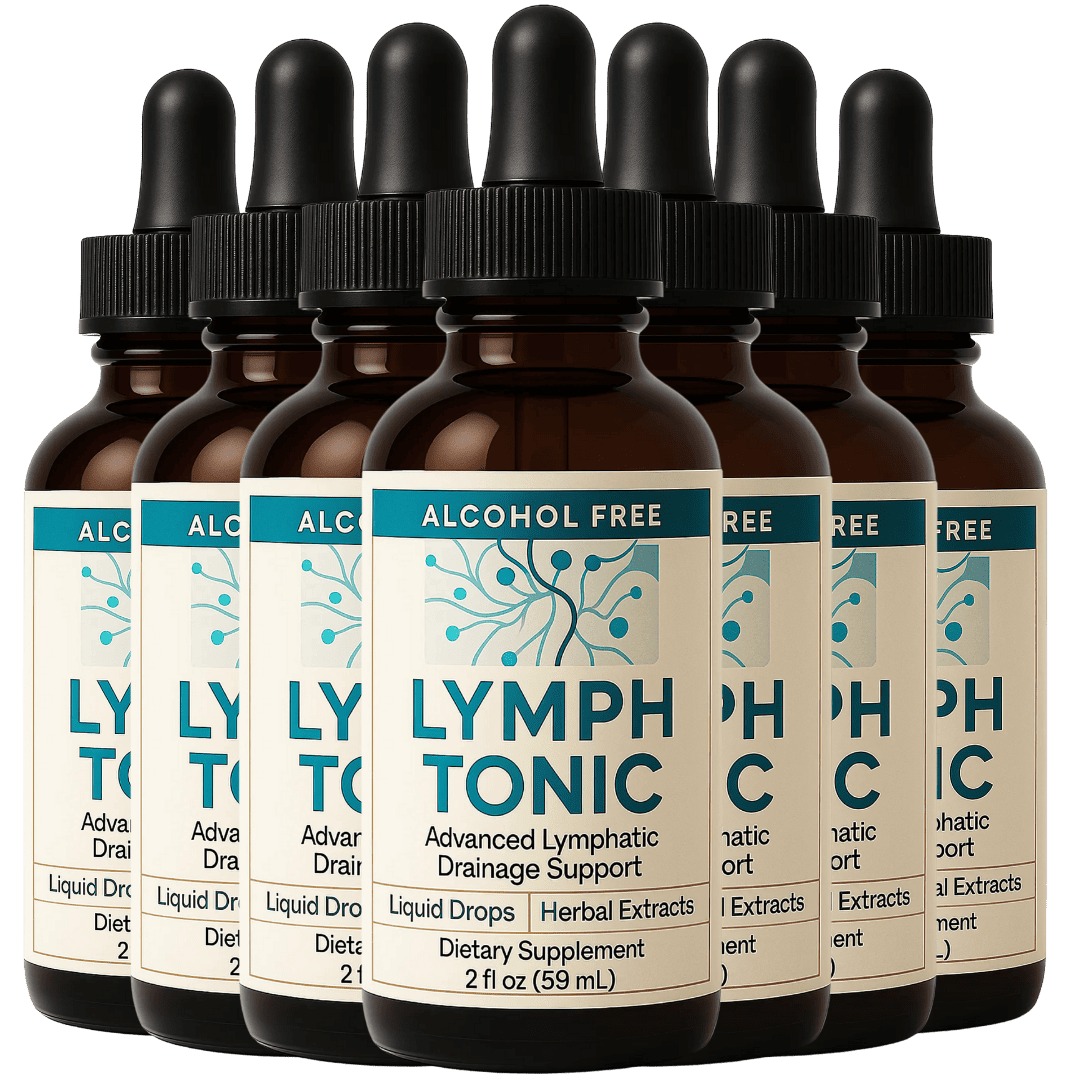
Lymph Tonic is an alcohol-free liquid tincture-style supplement packaged in a 2 fl oz (59 mL) dropper bottle. The label lists a serving size of two full droppers, with 30 servings per bottle, and states that each serving delivers 600 mg of a proprietary herbal blend. The other listed ingredients are purified water, vegetable glycerin, and natural flavoring, which is a fairly standard base for a glycerite-style liquid extract.
The vendor’s sales page frames the product around three ideas: supporting healthy lymphatic drainage, supporting circulation, and supporting general fluid balance, all phrased as “may help” or “traditionally used for,” language that keeps the claims in supplement territory rather than drug territory. That phrasing matters, because the lymphatic system is a real part of the circulatory system, and problems with it (lymphedema, for example) are diagnosable medical conditions that a liquid herbal drop is not equipped to treat.
How It Claims to Work
The pitch is straightforward: a blend of botanicals traditionally associated with circulatory and vascular health, delivered in a liquid format the vendor says absorbs faster than a capsule because it skips the digestion/breakdown step a pill needs. Liquid extracts can have a legitimate absorption edge over some poorly-formulated capsules, but “faster absorption” is not the same as “clinically proven to reduce fluid retention,” and the sales page does not cite any clinical trial on the finished Lymph Tonic formula itself, only on some of the individual ingredients in unrelated studies, which is common in this product category and is not the same as evidence the product works as sold.
Ingredients: What’s Actually Inside
Lymph Tonic discloses its six active botanicals by name, which is better than some competitors that hide everything behind a single generic label. What it does not disclose is how much of the 600 mg blend is any individual ingredient, a common “proprietary blend” structure that makes it impossible to know if you’re getting a clinically meaningful dose of any one component or mostly filler amounts of the cheaper ones.
| Ingredient (as labeled) | What It Is Claimed To Do |
|---|---|
| Boswellia Serrata Extract | a resin extract used in Ayurvedic medicine, most studied for joint and inflammatory support rather than lymphatic drainage specifically. |
| Curcumin | the pigment compound in turmeric, widely researched for anti-inflammatory activity; see NCCIH’s overview of turmeric/curcumin research for a balanced look at what is and isn’t established. |
| Baicalein | a flavonoid derived from Scutellaria (skullcap) species, mostly investigated in early-stage lab and animal research rather than human circulatory trials. |
| Horse Chestnut Extract | a European herbal ingredient with the most direct relevance here; see NCCIH’s horse chestnut page, which notes some evidence for chronic venous insufficiency symptoms specifically (standardized extract, not necessarily this product’s undosed version). |
| Omega-3 Fatty Acids | a well-established category for cardiovascular health generally, though the amount in a 600 mg total blend is almost certainly a fraction of a standard fish-oil dose. |
| Nattokinase | an enzyme from fermented soybeans (natto), popular in circulation-support supplements; it’s also the one ingredient on this list that most commonly carries a caution against combining with blood-thinning medication, which is worth flagging to a doctor or pharmacist before use. |
None of this makes the ingredient list “fake.” Several of these botanicals show up in legitimate circulatory-health research. It does mean the formula is built the way most ClickBank funnel supplements are built: recognizable ingredient names, no per-ingredient doses, and no trial on the actual finished product.
Pros and Cons
Pros
- All six active botanicals are named on the label, rather than hidden behind a single unnamed “blend”
- Alcohol-free liquid format may suit people who dislike capsules or avoid alcohol-based tinctures
- Contains at least two ingredients (horse chestnut, nattokinase) with some direct relevance to circulatory/vascular support in existing research
- 60-day money-back guarantee, which is a genuinely useful safety net if the product doesn’t work for you
- Sold through ClickBank, meaning a standardized checkout and refund process rather than an unregulated seller
Cons
- Undosed proprietary blend: you cannot tell from the label whether you’re getting a meaningful amount of any single ingredient
- No clinical trial on the finished product: only unrelated studies on some individual ingredients are implied, not cited with sources
- Inflated reference pricing: every package is discounted against a $129/bottle “regular price” we could not verify was ever charged, a common funnel-pricing tactic that makes the discount look bigger than it may actually be
- Manufactured urgency: claims of selling out in “4-6 days” every month and dramatic “your swelling will come back” language in the upsell copy are pressure tactics, not medical facts
- Heavily pushes the most expensive tier: the page is structured to steer most buyers toward the 6-bottle package before they’ve tried one bottle
Pricing and Guarantee
Lymph Tonic is sold in three package sizes, each with a lower per-bottle cost than the last:
| Package | Total Price | Per Bottle |
|---|---|---|
| 2-Month Supply (2 bottles) | $158 | $79 |
| 3-Month Supply (3 bottles) | $207 | $69 |
| 6-Month Supply (6 bottles) | $294 | $49 |
All tiers are marketed against a $129-per-bottle “regular price,” which we could not verify was ever the actual standalone price, a familiar tactic in this type of funnel that makes every option look like a steep discount. The checkout claims free shipping on most packages and a 60-day money-back guarantee. As with any ClickBank offer, confirm the live price and current refund terms on the official checkout page before you buy, since funnel pricing and bonuses can change without notice.
Is Lymph Tonic Legit? Red Flags to Know
“Legit” here means: is this a real product that ships and is sold through a standard payment processor, versus a sales claim you should take at face value. On the first point, yes, Lymph Tonic is a real product sold through ClickBank, which means standardized checkout security and a documented refund process. On the second point, the sales page uses several tactics worth knowing about before you buy:
- Scarcity claims that the product “sold out in 6 days” last month and “4 days” the month before, presented without any way to verify them.
- A named “Dr. Brenner” referenced in the urgency copy without a credential, license, or clinical affiliation disclosed anywhere we could find. Treat this as a marketing device, not a verified medical endorsement.
- Anchoring against an unverified $129 “regular price” on every tier, which inflates the apparent discount.
- Testimonials that read as generic and are marked only with a first name and last initial, which is standard for this type of page but means they can’t be independently verified.
None of this necessarily means the ingredients inside the bottle are ineffective, but it does mean the sales page is optimized to sell, not to inform, and its framing around “running out” and “devastating” swelling returning should not be read as medical fact.
Frequently Asked Questions
What is Lymph Tonic?
It’s a liquid herbal supplement sold as drops, containing a 600 mg proprietary blend of six botanicals marketed for lymphatic drainage and circulation support.
Is Lymph Tonic safe?
The individual ingredients are commonly used botanicals, but nattokinase in particular can interact with blood-thinning medication, and horse chestnut is generally recommended only as a standardized, de-glycyrrhizinated extract in clinical research. Talk to a doctor or pharmacist before starting it, especially if you take any medication or have a bleeding or clotting condition.
How long until I see results?
The vendor’s own copy suggests a “full transformation” over 90+ days, which is also the argument it uses to sell the 6-bottle package. There’s no independent timeline data on this specific formula, so treat any results timeline as a marketing estimate, not a guarantee.
Can I take it with other supplements or medications?
Possibly, but check with a healthcare provider first, particularly regarding nattokinase and any blood thinner, antiplatelet medication, or upcoming surgery.
What’s the actual return policy?
The site advertises a 60-day money-back guarantee. As with any ClickBank product, read the exact terms at checkout and keep your order confirmation, since return windows and conditions can vary by promotion.
Related Reading
Lymph Tonic is a lymphatic-support formula, a related but distinct angle from direct bladder-control research. For that side of the picture, see our guides on whether supplements can help with overactive bladder, what vitamins are good for bladder health, and whether it’s normal to pee a lot as you get older.
Final Verdict
Lymph Tonic lands as a middle-of-the-road entry in a crowded, hype-heavy category.
The named botanicals aren’t junk: a couple of them (horse chestnut, nattokinase) are genuinely relevant to circulatory support in outside research, but the undosed proprietary blend means you can’t verify you’re getting a meaningful amount of anything.
The sales tactics are the bigger issue than the ingredients.
Unverifiable “regular pricing,” manufactured scarcity, and an uncredentialed “Dr.” reference are all classic funnel-page moves that should make any buyer slow down, not a reason to assume the product itself is fraudulent.
If you do try it, keep expectations modest.
Treat it as a general wellness supplement, not a treatment for diagnosed lymphedema, chronic venous insufficiency, or any other circulatory condition, and see a doctor for any sudden, severe, or one-sided swelling rather than waiting on a supplement to resolve it.
Buy the smallest package first.
Given the undosed blend and lack of a product-specific clinical trial, the 2-bottle starter tier is the more rational first purchase over the heavily-promoted 6-bottle bundle, regardless of what the countdown timer implies.
If, after reading this, you’d still like to try it, you can check current pricing directly on the official order page below. As always, our full affiliate disclosure applies, and we encourage you to review the vendor’s own terms before purchasing.
Visit the Official Lymph Tonic Website →
Before you buy: this product’s official sales page may present its claims more confidently than the independent research on its ingredients currently supports. Read the breakdown above, weigh it against the vendor’s own marketing, and decide for yourself before you check out.
Our Review Methodology
MedlinePlus: Lymphatic Diseases
See also our direct Lymph Flow vs Lymph Tonic comparison.